
Heim > Nachricht > Yes, a puzzle game that tests physics skills is a fantastic concept that blends logic, problem-solving, and an understanding of real-world physical principles like gravity, momentum, friction, collision, balance, and force. These games are popular in both casual and educational gaming because they challenge players to think critically about how objects interact in a simulated environment. Here’s how such a game might work and what it tests: 🎮 Example: "World of Goo" or "Cut the Rope" – Physics Puzzle Games 🔧 Core Physics Concepts Tested: Gravity – Players must account for downward pull when placing or moving objects. Balance & Center of Mass – Structures must not tip over; players must distribute weight carefully. Momentum & Velocity – Timing and speed matter when launching objects or swinging pendulums. Collision & Elasticity – Bouncing, rolling, or breaking on impact. Friction & Resistance – Some surfaces slow movement; others allow smooth gliding. Pulleys, Ropes, and Tension – Used in advanced levels to transfer force. 🧠 What Skills Does It Test? Spatial reasoning – Visualizing how shapes and objects fit together. Predictive thinking – Anticipating how objects will move after a trigger. Trial-and-error learning – Experimenting with different approaches to solve a level. Understanding cause and effect – E.g., "If I cut this rope, will the platform fall on the target?" Problem-solving under constraints – Limited materials, time, or energy. 🧩 Sample Puzzle Game Mechanics: Level Goal: Get a ball into a goal using ramps, levers, and blocks. Tools Available: Ropes, springs, fans, magnets, buttons, and timers. Challenge: Build a chain reaction (like Rube Goldberg) to achieve the goal. 🎯 Example: Place a wooden block on a seesaw, attach a rope to a hanging weight, and time the release so the ball rolls into the basket — all while avoiding obstacles and using gravity and momentum. 📚 Educational Value: Great for teaching basic physics principles in a fun, interactive way. Used in classrooms to demonstrate Newton’s Laws, energy transfer, and mechanical advantage. Encourages STEM interest in children and teens. ✅ Why It Works: Engaging: Players are motivated to "fix" the physics to succeed. Replayable: Multiple solutions often exist. Intuitive: Simple controls, complex challenges. 🎯 Conclusion: Yes — a physics-based puzzle game is an excellent way to test and develop real-world physics intuition. Games like World of Goo, Cut the Rope, Human: Fall Flat, The Talos Principle, and Tumble Fever all use physics as a core mechanic to challenge players’ understanding of how the world works — one bounce, swing, and fall at a time. Would you like help designing your own physics puzzle game concept? I can help with mechanics, level ideas, or even a simple prototype! 🛠️💡
Yes, a puzzle game that tests physics skills is a fantastic concept that blends logic, problem-solving, and an understanding of real-world physical principles like gravity, momentum, friction, collision, balance, and force. These games are popular in both casual and educational gaming because they challenge players to think critically about how objects interact in a simulated environment. Here’s how such a game might work and what it tests: 🎮 Example: "World of Goo" or "Cut the Rope" – Physics Puzzle Games 🔧 Core Physics Concepts Tested: Gravity – Players must account for downward pull when placing or moving objects. Balance & Center of Mass – Structures must not tip over; players must distribute weight carefully. Momentum & Velocity – Timing and speed matter when launching objects or swinging pendulums. Collision & Elasticity – Bouncing, rolling, or breaking on impact. Friction & Resistance – Some surfaces slow movement; others allow smooth gliding. Pulleys, Ropes, and Tension – Used in advanced levels to transfer force. 🧠 What Skills Does It Test? Spatial reasoning – Visualizing how shapes and objects fit together. Predictive thinking – Anticipating how objects will move after a trigger. Trial-and-error learning – Experimenting with different approaches to solve a level. Understanding cause and effect – E.g., "If I cut this rope, will the platform fall on the target?" Problem-solving under constraints – Limited materials, time, or energy. 🧩 Sample Puzzle Game Mechanics: Level Goal: Get a ball into a goal using ramps, levers, and blocks. Tools Available: Ropes, springs, fans, magnets, buttons, and timers. Challenge: Build a chain reaction (like Rube Goldberg) to achieve the goal. 🎯 Example: Place a wooden block on a seesaw, attach a rope to a hanging weight, and time the release so the ball rolls into the basket — all while avoiding obstacles and using gravity and momentum. 📚 Educational Value: Great for teaching basic physics principles in a fun, interactive way. Used in classrooms to demonstrate Newton’s Laws, energy transfer, and mechanical advantage. Encourages STEM interest in children and teens. ✅ Why It Works: Engaging: Players are motivated to "fix" the physics to succeed. Replayable: Multiple solutions often exist. Intuitive: Simple controls, complex challenges. 🎯 Conclusion: Yes — a physics-based puzzle game is an excellent way to test and develop real-world physics intuition. Games like World of Goo, Cut the Rope, Human: Fall Flat, The Talos Principle, and Tumble Fever all use physics as a core mechanic to challenge players’ understanding of how the world works — one bounce, swing, and fall at a time. Would you like help designing your own physics puzzle game concept? I can help with mechanics, level ideas, or even a simple prototype! 🛠️💡
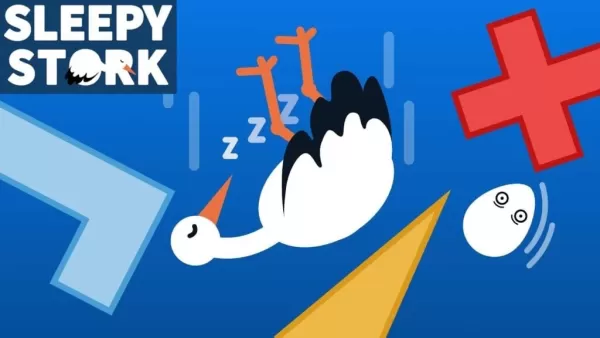
Sleepy Stork: A Whimsical, Wacky Puzzle Adventure Lands on Android
Dreamy, droll, and delightfully absurd — Sleepy Stork has officially taken flight on Android, bringing a fresh wave of charm to the physics puzzle genre. Developed by indie talent Tim Kretz and published under the playful banner of Moonstripes, this game is the latest in a string of quirky, handcrafted titles that include Window Wiggle, Butterfly Surprise, Dots and Bubbles, and Human Flag — each one a testament to simple mechanics wrapped in imaginative design.
🌙 The Premise: A Stork Who Can’t Stay Awake
You play as a stork caught mid-migration, suddenly overcome by sleep. As you drift through the sky, your mission becomes clear: guide this sleepy bird safely to its cozy nest — no easy feat, given the wobbly, unpredictable world you now navigate.
With over 100 levels, Sleepy Stork slowly builds in complexity, introducing new mechanics like:
- Bouncy platforms
- Swinging ropes
- Rolling obstacles
- Gravity-defying traps
- And yes — even wind gusts that send your bird tumbling like a feather in a storm
Tap, tilt, and interact with the environment to nudge, nudge, nudge your stork toward restful slumber.
🌈 Dream Logic Meets Physics Puzzles
What truly sets Sleepy Stork apart isn’t just its clever physics — it’s the dream theme woven into every level.
Each time your stork lands safely in bed, it slips into a surreal dream sequence. These aren’t just random visuals — they’re symbolic interpretations of real dream lore, sprinkled with a dash of humor and mystery.
For example:
- 🦁 Dreaming of a lion? You’re facing inner conflict or a looming challenge.
- 🚽 A dream about a toilet? Time to let go of emotional baggage — literally.
- 🌌 Flying through a galaxy made of clouds? You’re on a journey of self-discovery.
It’s a clever twist that turns simple puzzles into a playful exploration of the subconscious — like The Sims meets Carl Jung, but with a bird.
😂 Ragdoll Comedy at Its Finest
And let’s not forget the comedy. Thanks to a delightfully over-the-top physics engine, your stork often becomes a ragdoll of chaos — flopping, spinning, and flailing as it’s tossed across platforms, squished by falling blocks, or launched into orbit by a poorly timed spring.
There’s something oddly satisfying about watching a giant stork get launched like a ragdoll into a pile of pillows — and then waking up, blinking slowly, ready to try again.
It’s not just a game. It’s a laugh-out-loud experience with a heart.
📲 Download It Free — Because Everyone Needs a Nap (and a Good Laugh)
Sleepy Stork is free to download on the Google Play Store, with optional in-app purchases to unlock extra levels or remove ads. No paywalls, no pressure — just pure, whimsical fun.
Whether you’re a fan of puzzle games, dream symbolism, or just watching birds get tossed around like ragdolls, this one’s a must-try.
🔔 Pro Tip: Don’t skip the dream sequences — they’re not just eye candy. They’re part of the story, and they might just give you a clue about your next move.
📌 Also on the radar: The legendary 90s adventure classic Broken Sword: Shadow of the Templars is getting a Reforged Edition for mobile — a nostalgic treat for fans of mystery and masterful storytelling.
So if you’re in the mood for a game that’s as funny as it is thoughtful, as chaotic as it is calming, then Sleepy Stork is the perfect bedtime story — even if you’re not sleepy at all.
👉 Download now on Google Play and let your stork dream on. 🌙🐦💤














-
1
Jedes Pokémon -Spiel auf dem Nintendo Switch im Jahr 2025
Feb 25,2025
-
2
Stredew Valley: Ein vollständiger Leitfaden für Verzauberungen und Waffenschmieden
Mar 17,2025
-
3
![Anime Vanguards Tier -Liste - Beste Einheiten für jeden Gamemode [Update 3.0]](https://images.gzztb.com/uploads/35/17376012656791b0f12fa1c.jpg)
Anime Vanguards Tier -Liste - Beste Einheiten für jeden Gamemode [Update 3.0]
Feb 27,2025
-
4
Ragnarok X: Nächste Gen - Complete Enchantment Guide
May 25,2025
-
5
Poring Rush, das Casual-Battle-Spin-off des erfolgreichen MMORPG Ragnarok Online, ist jetzt erhältlich
Dec 30,2024
-
6

Roblox: Codes des LKW -Imperiums (Januar 2025)
Mar 05,2025
-
7

Nvidia RTX 5090 Spezifikationen Leck: Gerüchte bestätigt?
Mar 14,2025
-
8
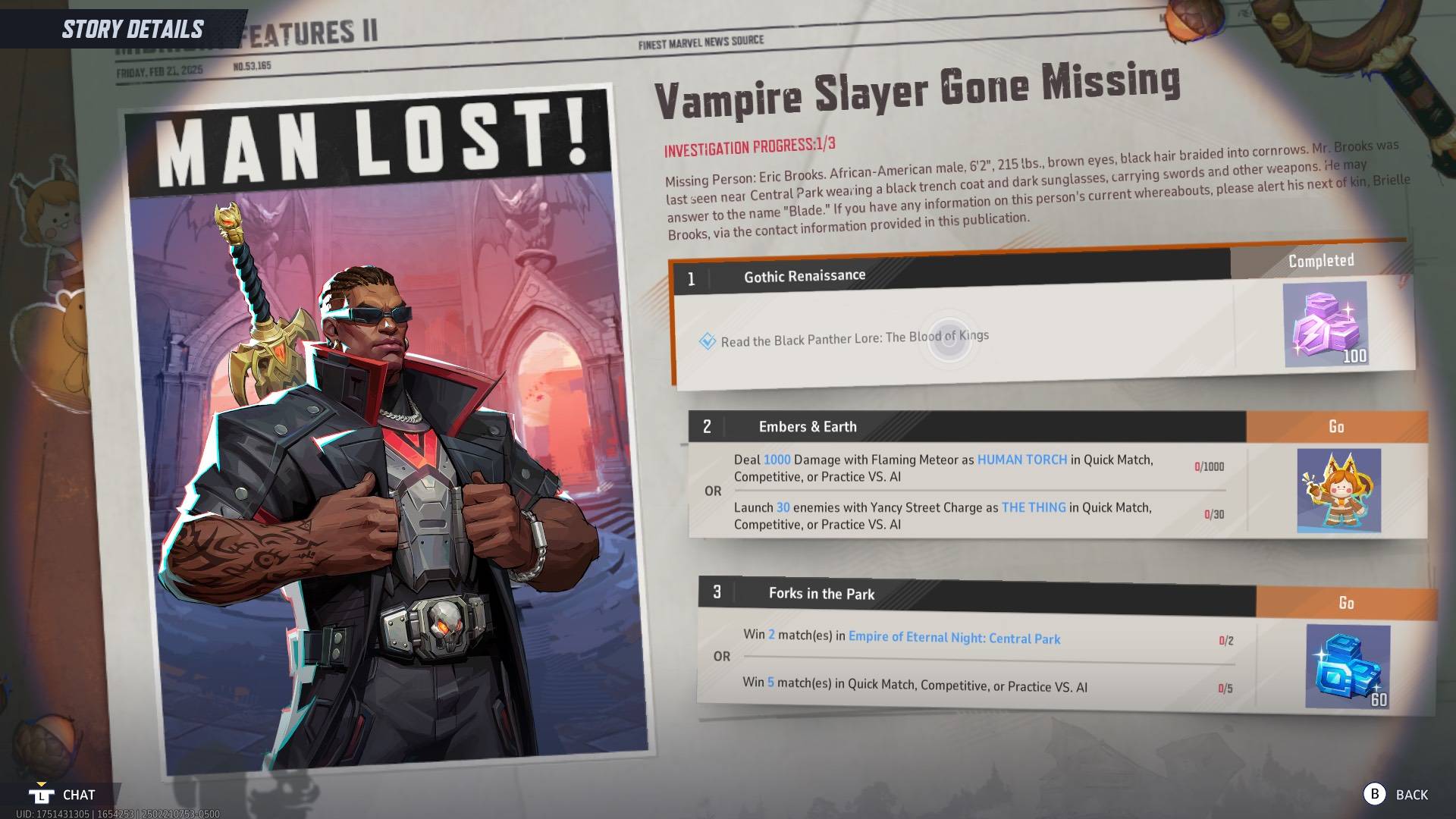
Wie man Black Panther Lore liest: Das Blut der Könige in Marvel -Konkurrenten
Mar 01,2025
-
9
Microsoft, um Copilot AI in Xbox App und Games zu integrieren
May 21,2025
-
10
Hearthstone hat das Jahr des Raptors mit einer Vielzahl neuer Inhalte begonnen
Mar 16,2025
-
Herunterladen

The Golden Boy
Lässig / 229.00M
Aktualisieren: Dec 17,2024
-
Herunterladen

Niramare Quest
Lässig / 626.43M
Aktualisieren: Feb 21,2023
-
Herunterladen

Mother's Lesson : Mitsuko
Rollenspiel / 716.30M
Aktualisieren: Dec 14,2024
-
4
POW
-
5
Gamer Struggles
-
6
How To Raise A Happy Neet
-
7
Poly Pantheon Chapter One V 1.2
-
8
Dictator – Rule the World
-
9
Strobe
-
10
Livetopia: Party